
- Most GPIO pins are available on the onboard computer.
- Four USB-A extension ports are available: two directly on the Jetson and two powered ports on the top USB hub.
- The hardware is open-sourced in order to be easier to modify, in particular the end-effector.
Changing the end-effector
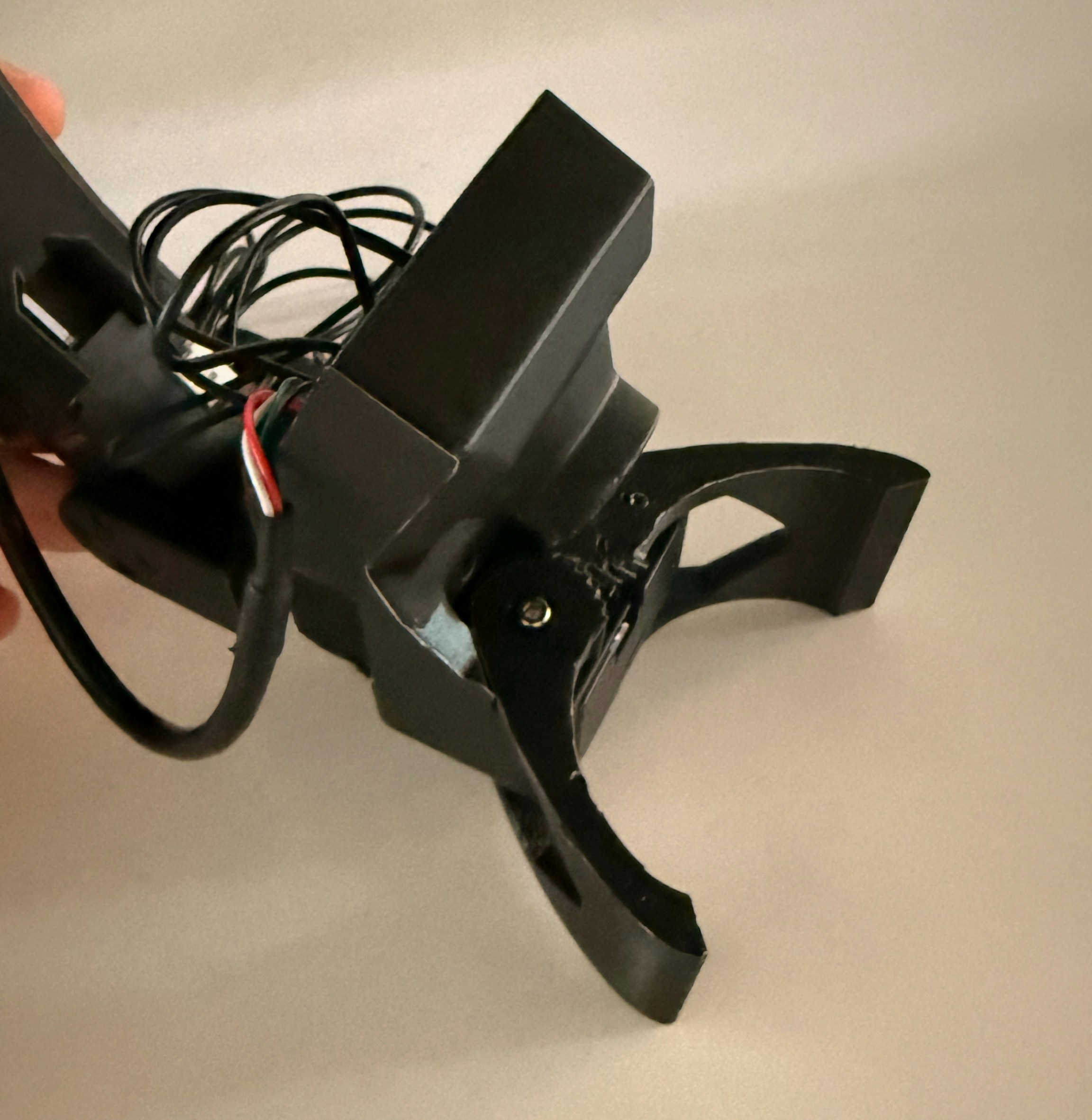
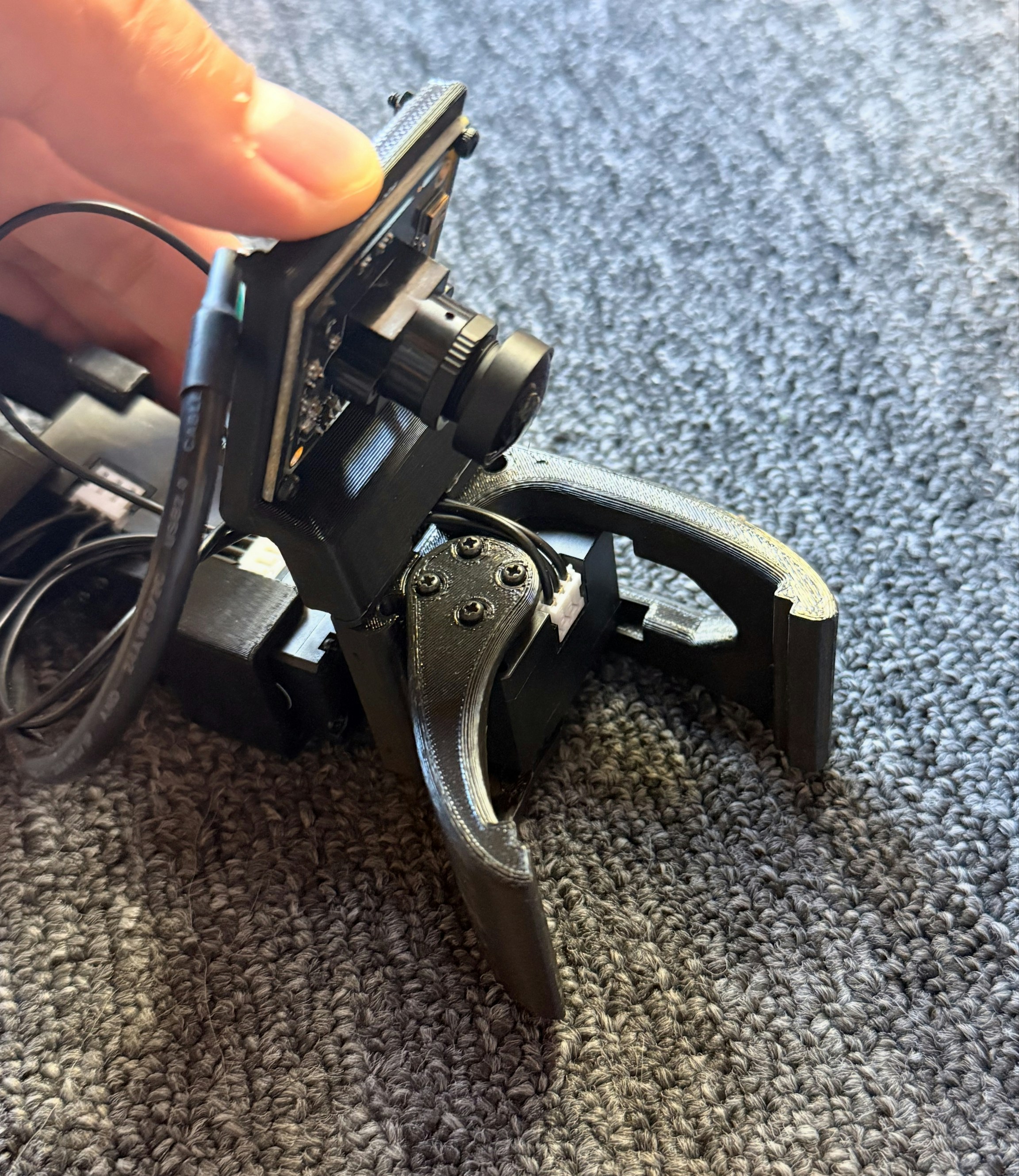
The end effector by default is a gripper (opposable thumbs). By nature of robot learning, if you change the end effector to any other shape, you will have to recollect your data for your manipulation models, but nothing else in the operating system needs to change if you still use the last actuator. Examples of two different types of end effectors we used without changing the code:MARS v1 gripper

One-side moving gripper
Adding sensors and effectors on the USB and GPIOs
Users can integrate additional sensors on the available ports. For any added device, make sure it is mounted and installed properly on the robot. You can then feed data into the BASIC OS by creating aSensor object in the SDK (TBD).
Some sensors we have already tried and work plug-and-play on MARS:
-
TONOR directional microphone ($29 on Amazon) - MARS already has a built-in microphone. This optional add-on improves directional pickup. Plug it in and use
TONORMicrophoneInput(TBD). - Blackiot Polverine Air Quality Sensor.