

How to create Agent Apps for Innate Robots using the SDK - or ROS2 straight

Core concepts

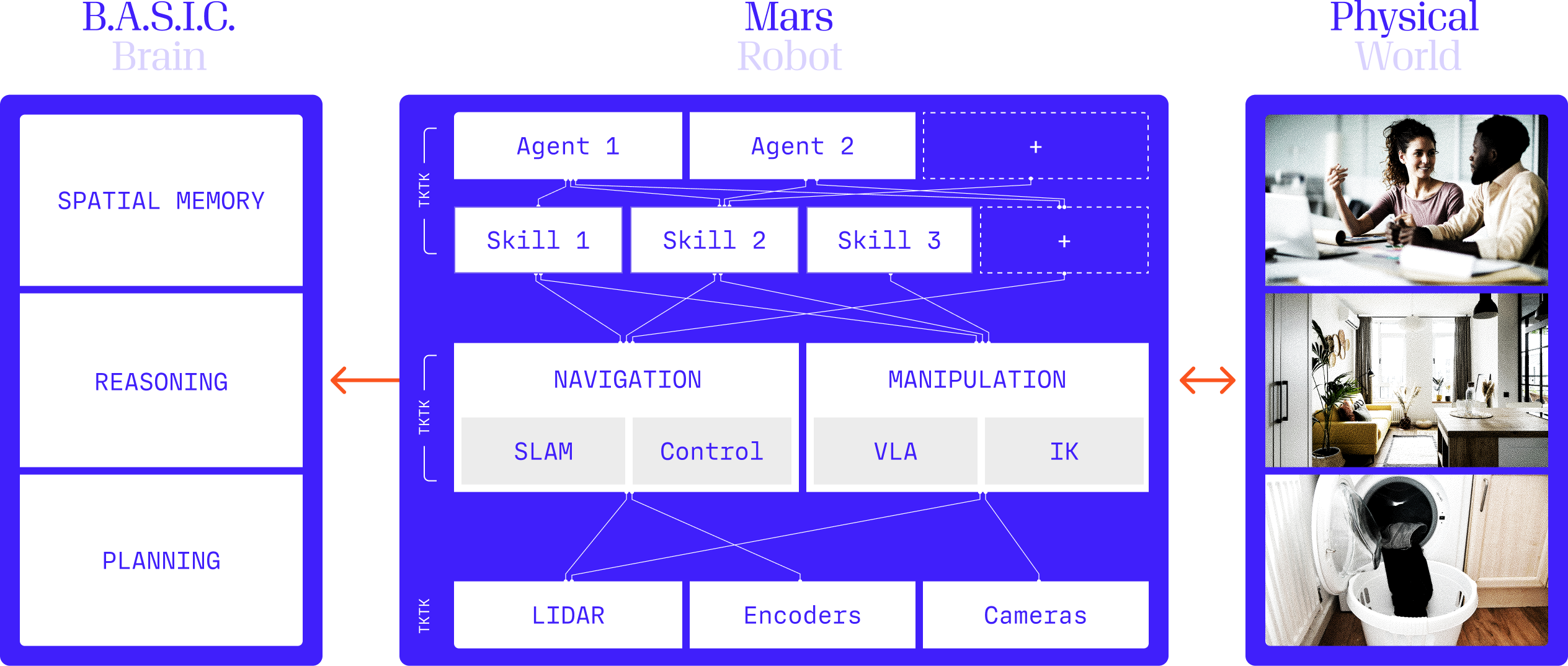
Innate software system diagram

An agentic OS

Innate robots run an agentic OS built on top of ROS2. It is powered by our cloud agent called BASIC. This abstraction layer allows to create powerful agentic applications quickly without having to care about the usual suspects of classic robotics (unless you want to).

Agents

The central concept of the Innate OS is the agent , which is our name for a physical app for robots. They are defined by a system prompt and a set of skills they can use. Agents are like physical apps for Innate robots. The most simple agent is:
from brain_client.agent_types import Agent
from typing import List

class HelloWorld(Agent):
    @property
    def id(self) -> str:
        return "hello_world"

    @property
    def display_name(self) -> str:
        return "Hello World"

    def get_skills(self) -> List[str]:
        return [""]

    def get_prompt(self) -> str:
        return """You are just a robot saying hello_world once you start."""
This will start the robot and make it say hello world on the speakers once. See more in Agents

Skills

Skills are the second core concept of the Innate OS. A skill can be defined with code, a model checkpoint (such as a VLA) or other specific interfaces we define for you. Adding a skill to an agent is like giving additional capabilities to your robot. Similarly to agentic frameworks, skills can be thought as tool calls, with extra sauce. Skills can be interrupted by the robot during execution if required, and send feedback in the context of to the running agent. See how to create skills in Skills

BASIC

BASIC is the embodied AI agent that controls Mars. BASIC can run agents and skills, and gives Mars the ability to reason, memorize, plan and make decisions as it runs. Understand more how BASIC runs in Innate Capabilities

ROS2 core

Our OS runs at the core on ROS2 and can be augmented at that level by roboticists that understand it. See ROS2 Core for more information on nodes, topics, and services available.